CNA vs Medical Assistant: Training, Pay and Workplaces
CNAs provide hands-on bedside personal care in nursing homes and hospitals after state-approved training. Medical assistants work primarily in outpatient clinics and physician offices handling both clinical support and administrative duties, earning roughly $1.65 more per hour nationwide.
- Official sources only
- Every fact linked to its source
- No paid rankings
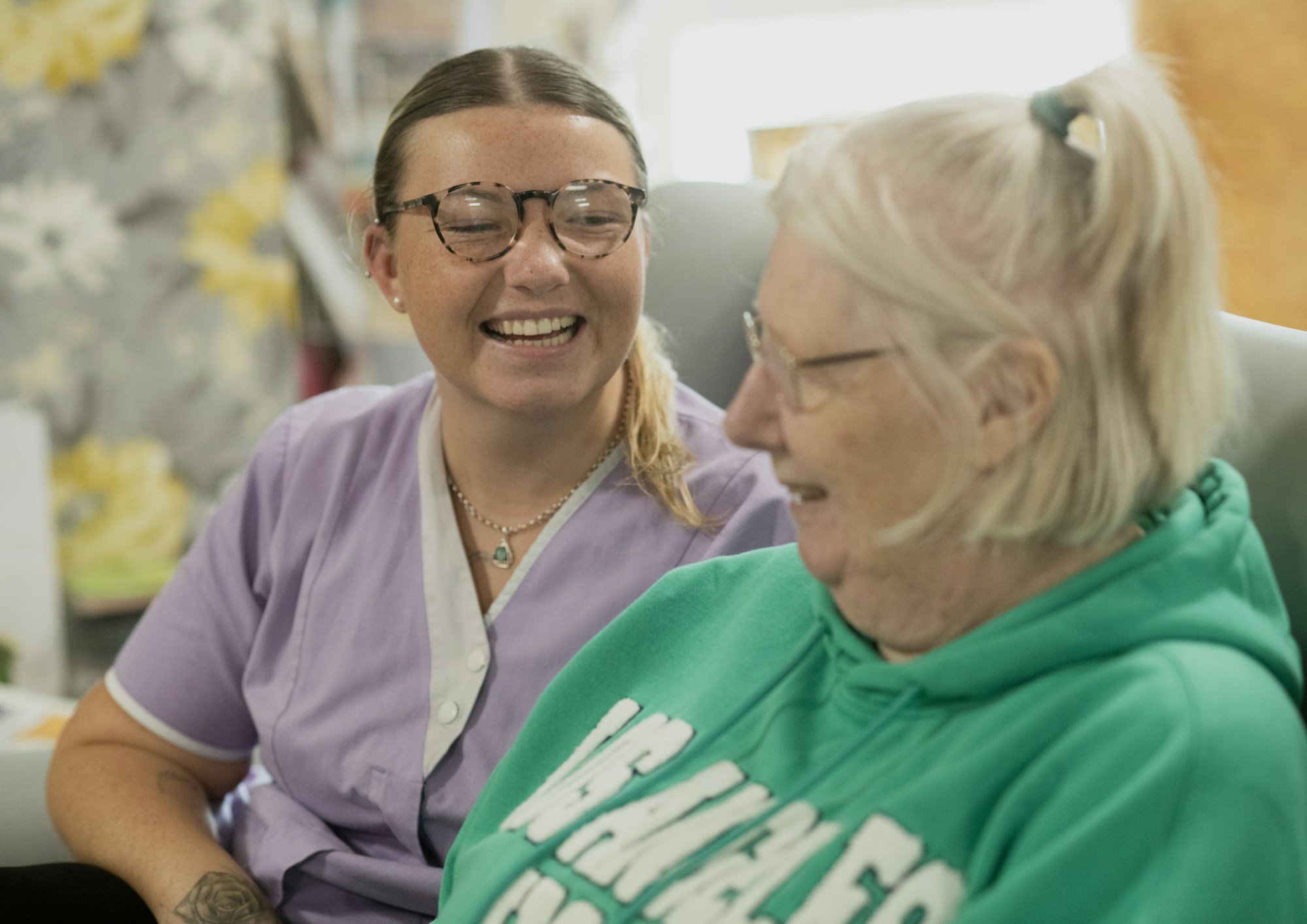
Photo: Age Cymru on Unsplash
On this page
The short answer
- CNA (Certified Nurse Aide): Inpatient, direct physical care. CNAs assist patients and nursing home residents with essential daily activities (bathing, dressing, eating, transferring, and recording vital signs) under nurse supervision. Training requires at least 75 hours under federal law, 100 hours in Texas, and an approved program or direct exam challenge in Florida.
- Medical Assistant (MA): Outpatient clinic and ambulatory care support. Medical assistants handle both clinical tasks (rooming patients, taking vital signs, giving basic injections, collecting lab specimens) and administrative tasks (scheduling appointments, medical billing, EHR entry) under physician supervision. According to the BLS Occupational Outlook Handbook, postsecondary certificate programs typically take about 1 year, and associate degree programs take 2 years.
- Licensing differences: CNAs must complete a state-approved program (or challenge the exam where permitted) and register on the state Nurse Aide Registry. Medical assistants are unlicensed assistive personnel in Texas and Florida; no state license is required, though employers frequently prefer voluntary private certifications.
- Work schedule: CNAs frequently work shift work including nights, 12-hour shifts, weekends, and holidays in 24-hour care facilities. Medical assistants typically work daytime business hours (Monday through Friday) in outpatient doctor's offices.
Side-by-side comparison
| Factor | CNA (Certified Nurse Aide) | Medical Assistant (MA) |
|---|---|---|
| Primary work setting | Nursing facilities, assisted living, hospitals | Physicians' offices, outpatient clinics, urgent care |
| Typical work schedule | Day, evening, or night shifts (24/7 coverage) | Monday–Friday business hours |
| Training length | 75–100+ hours (or Florida challenge) | About 1 year (certificate) or 2 years (associate degree) |
| State credential | State Registry listing (Texas HHSC / Florida BON) | Unlicensed assistive personnel (no state license in TX/FL) |
| Certification exam | State Competency Exam (Prometric in Texas and Florida) | Voluntary industry exams (e.g. CMA via AAMA, RMA via AMT) |
| Core responsibilities | Activities of daily living, hygiene, mobility, vitals | Patient intake, vital signs, phlebotomy, EHR entry, billing |
| National median pay | $20.32/hr ($42,260) | $21.97/hr ($45,690) |
Work settings and daily schedules
The day-to-day lifestyle in these two roles is shaped by where care takes place.
According to the Bureau of Labor Statistics (BLS), the majority of nursing assistants work in skilled nursing facilities, assisted living communities, and acute-care hospitals. Because these facilities operate 24 hours a day, 365 days a year, CNAs often work eight-hour or twelve-hour shifts across mornings, evenings, overnights, weekends, and holidays.
By contrast, the BLS Occupational Outlook Handbook notes that the majority of medical assistants work in outpatient physicians' offices and outpatient care centers. These practices generally operate during regular business hours, meaning medical assistants typically work standard daytime schedules with weekends and major holidays off.
Clinical tasks and patient care duties
While both roles interact directly with patients, their daily focus differs:
- CNA Duties: Nurse aides provide intensive, hands-on personal care to residents and inpatient hospital patients. Typical responsibilities include assisting with bathing, dressing, toileting, feeding, repositioning patients in bed to prevent pressure ulcers, measuring vital signs, and transferring patients using mechanical lifts and transfer belts.
- Medical Assistant Duties: Medical assistants handle both clinical and clerical outpatient workflow. Clinical duties include greeting and rooming patients, measuring height, weight, and blood pressure, preparing exam rooms, administering basic physician-ordered injections, performing electrocardiograms (EKGs), collecting lab specimens, and phlebotomy. Clerical duties include scheduling follow-up appointments, answering patient inquiries, verifying insurance eligibility, and updating electronic health records (EHR).
Training length and state regulation
The regulatory requirements for entering each profession differ markedly:
CNA Regulation: Federal regulations (42 CFR §483.152) require all nurse aides working in Medicare- and Medicaid-certified nursing facilities to complete at least 75 hours of state-approved training (100 hours in Texas) and pass a state competency evaluation. Florida permits completing an approved training program or challenging the exam directly if at least 18, or with a high school diploma or equivalent. Upon passing, aides are listed on the state Nurse Aide Registry maintained by Texas Health and Human Services (HHSC) or the Florida Board of Nursing.
Medical Assistant Regulation: In Texas and Florida, medical assistants are not licensed by the state. Under the Texas Medical Practice Act and Florida Medical Practice Act, medical assistants function as unlicensed personnel performing delegated routine clinical and administrative duties under the supervision and legal responsibility of a licensed physician. According to the BLS, formal postsecondary certificate programs take about 1 year, and associate degree programs take 2 years. While state licensure is not required, many employers prefer or require voluntary national credentials such as the Certified Medical Assistant (CMA) credential awarded by the American Association of Medical Assistants (AAMA).
Pay comparison in Texas, Florida and the U.S.
According to the BLS Occupational Employment and Wage Statistics (OEWS) survey, medical assistants earn slightly higher median wages than nursing assistants, reflecting their dual clinical and administrative skill set:
| Region | CNA Median Pay (SOC 31-1131) | Medical Assistant Median Pay (SOC 31-9092) | Hourly Difference |
|---|---|---|---|
| United States | $20.32/hr ($42,260) | $21.97/hr ($45,690) | +$3,430/yr |
| Texas | $18.03/hr ($37,500) | $19.00/hr ($39,520) | +$2,020/yr |
| Florida | $18.03/hr ($37,510) | $21.00/hr ($43,680) | +$6,170/yr |
CNA and Medical Assistant figures from BLS OEWS (May 2025 data).
If you want to start as a CNA, compare approved local programs in major Texas and Florida cities:
- CNA classes in Houston, TX
- CNA classes in Dallas, TX
- CNA classes in Austin, TX
- CNA classes in Miami, FL
- CNA classes in Orlando, FL
- CNA classes in Tampa, FL
Common questions
Are medical assistants licensed in Texas or Florida?
No. Neither Texas nor Florida issues a state license for medical assistants. Medical assistants operate as unlicensed assistive personnel who perform delegated tasks under the supervision of a licensed physician.
Can a CNA work as a medical assistant?
Some outpatient clinics hire experienced CNAs for patient rooming and vital signs, providing on-the-job training for specialized clinic tasks. However, many practices specifically prefer medical assistants with phlebotomy and medical billing training, or a credential such as the CMA (AAMA).
Do CNAs draw blood?
Routine venipuncture is not taught in standard state-approved CNA programs. In hospitals, nurse aides who advance to Patient Care Technician (PCT) roles often complete supplemental phlebotomy and EKG training.
Which training program takes less time?
CNA training takes significantly less time: state-approved programs require 75 to 100+ hours (or passing the Florida exam directly). By contrast, the BLS reports that postsecondary medical assistant programs typically take about 1 year for a certificate or 2 years for an associate degree.
Find approved CNA classes near you
Search 1,030 state-approved programs by city or ZIP code, or use your location.
Sources
- BLS OEWS: Nursing Assistants (SOC 31-1131)
- BLS OEWS: Medical Assistants (SOC 31-9092)
- BLS Occupational Outlook Handbook: Medical Assistants
- American Association of Medical Assistants (AAMA): Certification
- 42 CFR §483.152 Nurse Aide Training (Cornell LII)
- Texas Medical Board
- Florida Board of Medicine
This guide explains official rules in plain language. It isn't legal advice. Your state's regulator has the final word.